Neural networks are interesting models underlying much of the newest AI applications and algorithms. Recent advances in training algorithms and GPU enabled code together with publicly available
Neural networks are interesting models underlying much of the newest AI applications and algorithms. Recent advances in training algorithms and GPU enabled code together with publicly available
Neural Networks are interesting algorithms, but sometimes also a bit spooky. In this blog post I explore the possibilities for teaching the neural networks to generate completely

I’m looking forward for the first to attend the RDKit user group meeting from 26-28 October 2016 in Basel, Switzerland. RDKit is an open source chemoinformatics toolkit

Inspired by the success reported in my last blog post [Link] about the open source docking program rDock [http://rdock.sourceforge.net], I decided to investigate the docking accuracy performance

Last time i tested the basics of the docking program rDock; Installation, basic setup and docking, as well as had a brief walkthrough about how to post-process
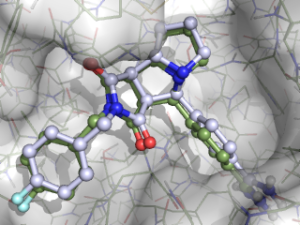
rDock is an open source docking program, trying to solve the same kind of scientific questions as Autodock Vina, which I have covered in a couple of
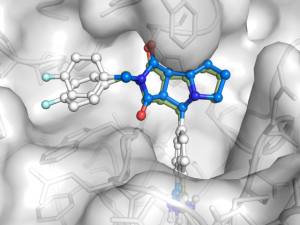
In the two previous blog posts Ligand docking with Smina and Never use re-docking for …, it was demonstrated how easy it is to dock a small ligand
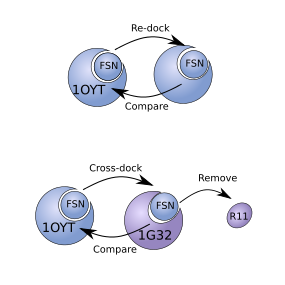
Re-docking of ligands found in PDB files are often used as a fast evaluation of a docking program before working with designed or other ligands. However this
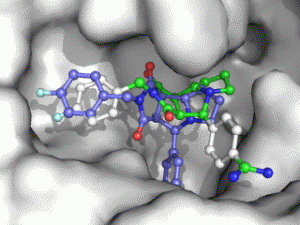
Moleculer Docking is a powerful technique for studying potential ligand-receptor interactions. It can be done with free tools. In this blog post I showcase the docking program
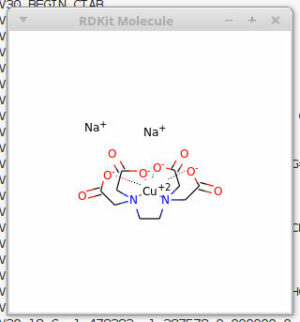
When I have been working with chemical databases and import of molecules I have encountered numerous problems with the way chemical structures are drawn. Most often the