Skip to content

Cheminformania

  • Cheminformania Consulting
  • Blog
  • About
    • About Cheminformania
    • Esben Jannik Bjerrum
  • Cheminformania Consulting
  • Blog
  • About
    • About Cheminformania
    • Esben Jannik Bjerrum

A deep Tox21 neural network with RDKit and Keras

Esben Jannik Bjerrum/ January 15, 2017

I found some interesting toxicology datasets from the Tox21 challenge, and wanted to see if it was possible to build a toxicology predictor using a deep neural
Read More

A deeper look into chemical space with neural autoencoders

Esben Jannik Bjerrum/ January 3, 2017

In the last blogpost the battle tested principal components analysis (PCA) was used as a dimensionality reduction tool. This time we’ll take a deeper look into chemical

Read More

Molecular neural network models with RDKit and Keras in Python

Esben Jannik Bjerrum/ December 6, 2016

Neural networks are interesting models underlying much of the newest AI applications and algorithms. Recent advances in training algorithms and GPU enabled code together with publicly available
Read More

Machine Learning optimization of Smina cross docking accuracy

Esben Jannik Bjerrum/ May 19, 2016

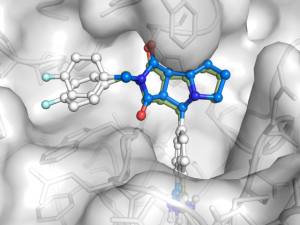
In the two previous blog posts Ligand docking with Smina and Never use re-docking for …, it was demonstrated how easy it is to dock a small ligand
Read More

Learn how to map a simple Ames mutagenicity model to molecular features using RDkit.

Esben Jannik Bjerrum/ March 31, 2016

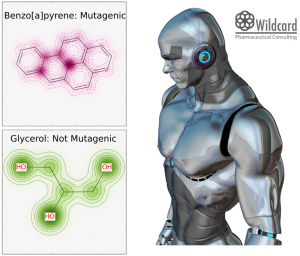
Toxic compounds are most often something that we try to avoid when designing novel pharmaceutical compounds, so it could be nice to get a prediction if a
Read More

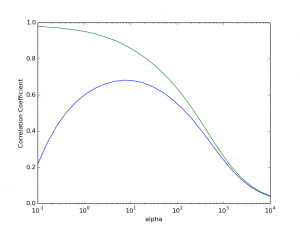
Never do this mistake when using Feature Selection

Esben Jannik Bjerrum/ February 19, 2016

Feature selection is a powerful way of reducing the complexity of a machine learning or statistical model. But feature selection must be done in the right way,
Read More

Safer fitting through regularization

Esben Jannik Bjerrum/ January 6, 2016

Last time a simple multiple linear regression (MLR) model was seriously overfitted to molecular solubility data. This time the concept of regularization will be tested. Recall that
Read More

Wash that gold: Modelling solubility with Molecular fingerprints….

Esben Jannik Bjerrum/ December 21, 2015

Last blog entry the conversion between molecule and fingerprint was briefly touched upon. Now the fingerprints will be used as the basis for a simple attempt to

Read More

Post navigation

Newer posts →

Search

Search for:

Recent Comments

  1. esbenbjerrum on A deep Tox21 neural network with RDKit and KerasJanuary 22, 2025

    Yes, it's a single-task network. For a multi-task network, you would need to increase the number of output-neurons to fit…

  2. Elon on A deep Tox21 neural network with RDKit and KerasJanuary 20, 2025

    If I understand correctly, it seems you have used a single-label approach 'SR-MMP' instead of a multi layer approach using…

  3. esbenbjerrum on Generating Unusual Molecules with Genetic AlgorithmsNovember 24, 2024

    Yes, of course that is possible;-) I wrote a follow-up blogpost using molecular log-likelihood estimation to accomplish just that Generating…

Popular Pages

  • Transformer for Reaction Informatics – utilizing PyTorch Lightning
  • Learn how to hack RDKit to handle peptides with pseudo atoms
  • rdEditor: An open-source molecular editor based using Python, PySide2 and RDKit
  • Learn how to teach your computer to "See" Chemistry: Free Chemception models with RDKit and Keras
  • Building a simple SMILES based QSAR model with LSTM cells in PyTorch

Tags

AI AI drug discovery Autodock Vina autoencoders benchmarking Chemception chemical deep learning Cheminformatics CNNs computational chemistry Computational Creativity Cross Docking Deep Learning de novo design docking Drug Discovery GUI Heteroencoders Inverse QSAR ipywidgets Jupyter Keras Ligand Docking Long short term memory Machine Learning molecule generation Molecules Neural Networks Optimization PCA Python Pytorch QSAR RDKit rDock Reaction Prediction recurrent neural networks sklearn SMILES generation Spectroscopy Theano Transformers Tuning vina xlwings

The software is provided “as is”, without warranty of any kind, express or implied, including but not limited to the warranties of merchantability, fitness for a particular purpose and non-infringement. In no event shall the authors or copyright holders be liable for any claim, damages or other liability, whether in an action of contract, tort or otherwise, arising from, out of or in connection with the software or the use or other dealings in the software.

Mastodon

© Esben Jannik Bjerrum, 2015-2019. Unauthorized use and/or duplication of this material without express and written permission from this site’s author and/or owner is strictly prohibited. Excerpts and links may be used, provided that full and clear credit is given to Esben Jannik Bjerrum and Cheminformania/Wildcardconsulting.dk with appropriate and specific direction to the original content.

Search

Search for:
https://www.youtube.com/watch?v=bvgz1CUzTYs
2015 - 2022 © Powered by Theme Vision.